


Yom Kippur is the holiest day of the Jewish year. For about 25 hours, Jews around the world set aside food, work, and everyday comforts to focus on one thing: returning to God, to themselves, and to one another. It is a solemn day, yet it is not a sad one. Jewish tradition describes Yom Kippur as a day of deep hope, when every person is given the chance to start again with a clean slate.
In this guide we explain what Yom Kippur means, where it comes from, how the fast and prayers are observed, and the customs that make this day so powerful, from the white clothing of the synagogue to the final sound of the shofar at nightfall.
What Is Yom Kippur?
Yom Kippur (יום כיפור) means “Day of Atonement.” It falls on the 10th day of the Hebrew month of Tishrei and is commanded in the Torah: “On the tenth day of this seventh month is the Day of Atonement… you shall afflict your souls” (Leviticus 23:27). The Torah promises that “on this day He will atone for you, to purify you from all your sins; before God you shall be purified” (Leviticus 16:30).
Yom Kippur is the climax of the High Holidays. It closes the Ten Days of Repentance (Aseret Yemei Teshuvah) that begin on Rosh Hashanah. According to tradition, on Rosh Hashanah each person’s fate for the coming year is written, and on Yom Kippur it is sealed.
The date also carries a story of forgiveness. Jewish tradition teaches that after the sin of the Golden Calf, Moses spent forty days on Mount Sinai pleading for the people, and returned with the second set of Tablets on the 10th of Tishrei. The very first Yom Kippur was a sign that a broken relationship can be repaired.
When Is Yom Kippur?
Like every Jewish holiday, Yom Kippur begins at sunset and ends at nightfall the following day.
- Yom Kippur 2026 (5787): began at sunset on Sunday, September 20, 2026 and ended at nightfall on Monday, September 21, 2026.
- Yom Kippur 2027 (5788): begins at sunset on Sunday, October 10, 2027 and ends at nightfall on Monday, October 11, 2027.
Just five days later comes Sukkot, the joyful Feast of Tabernacles. Many families hammer the first nail of their sukkah on the night Yom Kippur ends.
Teshuvah: The Heart of the Day
The central idea of Yom Kippur is teshuvah, usually translated as “repentance” but literally meaning “return.” Maimonides describes teshuvah as a process: recognizing a wrong, sincerely regretting it, confessing it in words, and resolving not to repeat it.
There is an important condition. The Mishnah teaches that Yom Kippur atones for sins between a person and God, but for wrongs done to another person, Yom Kippur does not atone until you have made peace with the one you hurt (Mishnah Yoma 8:9). That is why many people use the days before Yom Kippur to call friends and family and ask for forgiveness, and to offer forgiveness in return.
The Fast and the Five Restrictions
The Torah’s command to “afflict your souls” is observed through five traditional restrictions, kept for the whole 25 hours:
- No eating or drinking
- No washing or bathing for pleasure
- No applying lotions, creams, or perfumes
- No wearing leather shoes
- No marital relations
The goal is not suffering for its own sake. By stepping away from physical needs for one day, we are compared to angels, free to focus entirely on the soul. Jewish law puts health first: children, people who are ill, and women who are pregnant or have recently given birth may be exempt or required to eat, and anyone with a medical condition should consult their doctor and rabbi before fasting.
Erev Yom Kippur: Preparing for the Holiest Day
The day before Yom Kippur has its own customs. It is a mitzvah to eat well on Erev Yom Kippur, and families gather for the seudah mafseket, the final meal before the fast. Other customs include:
- Giving extra tzedakah (charity)
- Asking forgiveness from family, friends, and colleagues
- Kapparot, which today is most often done by circling charity money over one’s head and donating it
- Immersing in a mikveh, a custom kept mainly by men in many communities
- Lighting holiday candles before sunset and blessing the children
Wearing White on Yom Kippur
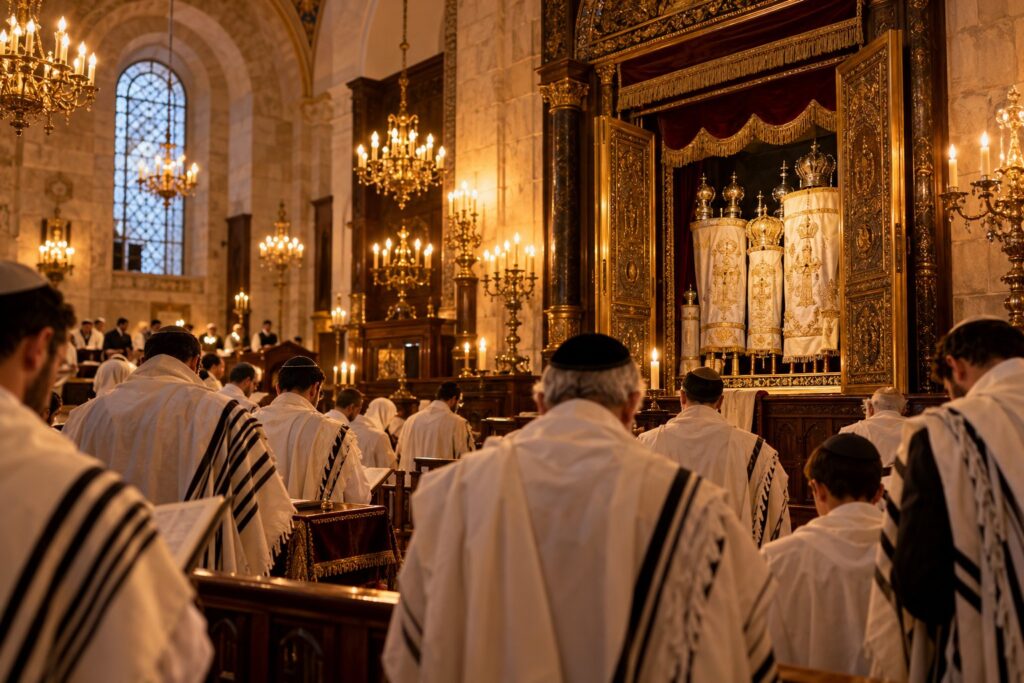
Walk into a synagogue on Yom Kippur and you will see a sea of white. Many men wear a kittel, a simple white robe, and many women and men dress in white clothing. White recalls the prophet Isaiah’s promise: “Though your sins be like scarlet, they shall be as white as snow” (Isaiah 1:18). It also reminds us of the angels, and of the humility and purity we hope to reach by the end of the day.
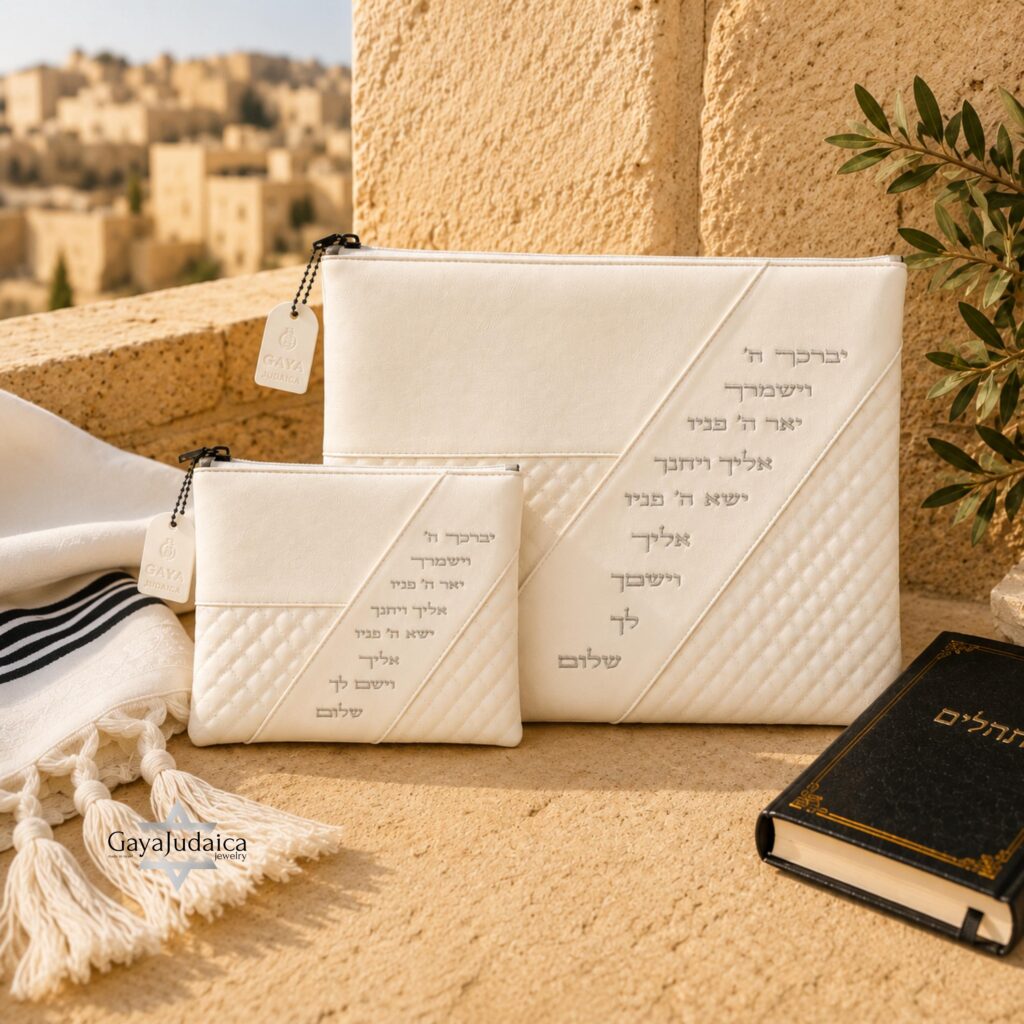
Yom Kippur is also the only evening of the year when the tallit (prayer shawl) is worn at night, beginning with Kol Nidre. A beautiful tallit bag helps keep this special garment ready for the holidays; our white quilted tallit and tefillin bag set is embossed with the Priestly Blessing and matches the white spirit of the day.
The Five Prayer Services of Yom Kippur
Yom Kippur is the only day of the year with five prayer services. Much of the day is spent in the synagogue, and each service has its own character.
1. Kol Nidre and Maariv
The holiday opens just before sunset with Kol Nidre, an Aramaic declaration annulling vows, chanted three times to a haunting melody while the Torah scrolls are held before the congregation. It is one of the most moving moments of the Jewish year. The evening prayer that follows includes the first Vidui (confession), recited in the plural, “we have sinned,” because the community stands together.
2. Shacharit
The morning service includes a Torah reading describing the Yom Kippur service in the Tabernacle (Leviticus 16) and, in Ashkenazi communities, Yizkor, the memorial prayer for loved ones who have passed away.
3. Musaf
The additional service contains the Avodah, a dramatic retelling of how the High Priest entered the Holy of Holies in the Temple in Jerusalem. When the congregation recalls how the people bowed and cried out on hearing God’s name, many worshippers kneel and bow fully to the floor, something done in Ashkenazi synagogues only on Rosh Hashanah and Yom Kippur. In many communities the kohanim also bless the congregation with Birkat Kohanim, the Priestly Blessing: “May God bless you and protect you…” (Numbers 6:24-26).
4. Mincha
In the afternoon the Book of Jonah is read. Jonah tries to run away from his mission, yet the people of Nineveh change their ways and are forgiven. The message is clear: no one is too far away to return.
5. Neilah
As the sun sets, the final service, Neilah (“closing”), begins. The image is of the heavenly gates about to close, and the prayers become more urgent and more hopeful. The ark stays open, and many people stand for the entire service. Neilah ends with the congregation declaring together Shema Yisrael once, Baruch Shem three times, and Hashem Hu HaElokim (“the Lord is God”) seven times. Then comes one long blast of the shofar and the words everyone has waited for: L’shanah haba’ah b’Yerushalayim, “Next year in Jerusalem!”
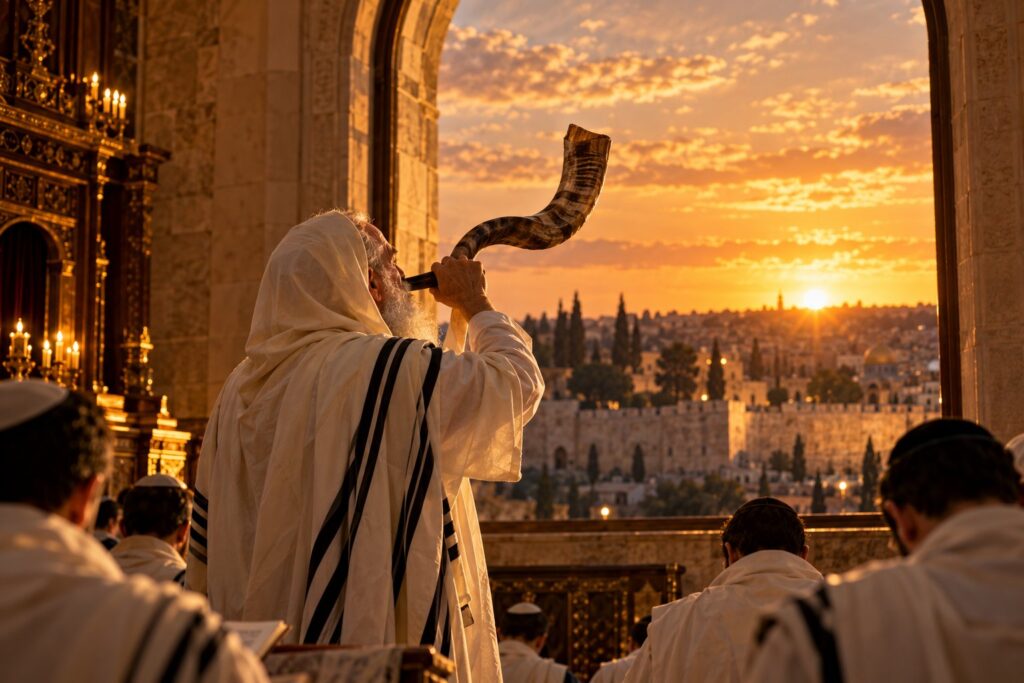
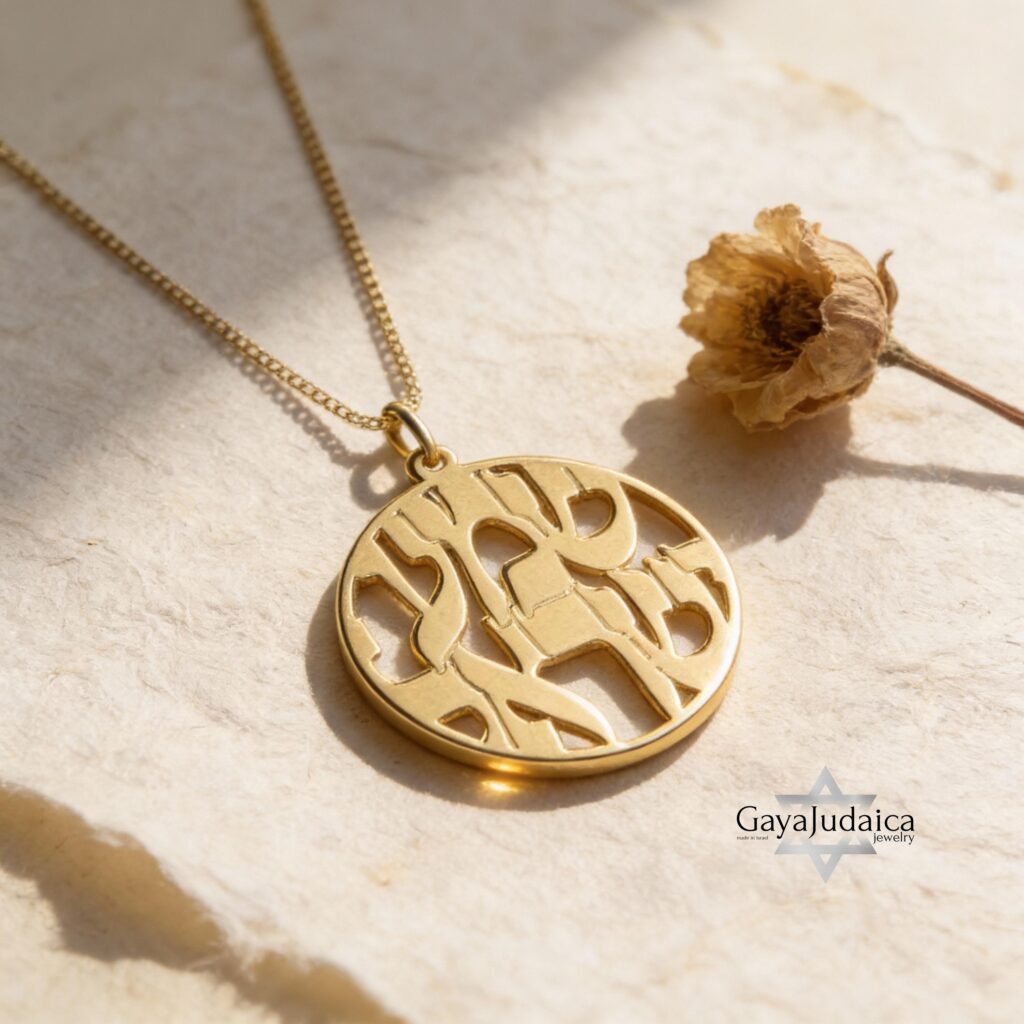
Many people carry these words with them all year. Our 14K gold Shema Israel necklace and Priestly Blessing gold pendant are handmade in Jerusalem and keep the prayers of this day close to the heart.
Breaking the Fast
After nightfall, the holiday ends with Havdalah, the short ceremony separating holy time from ordinary time. Then families and friends gather to break the fast, usually with a light meal: tea or juice, cake, bagels, dairy dishes, or whatever family tradition calls for. There is a lovely feeling of lightness in the air, and many people head straight outside to begin building their sukkah, turning the energy of Yom Kippur into a new mitzvah.
Yom Kippur in Israel
In Israel, Yom Kippur transforms the entire country. Shops, offices, and airports close, radio and television go quiet, and cars disappear from the roads almost completely. Even many Israelis who do not fast take part in the stillness. Highways fill with children on bicycles and families walking in the streets, and synagogues overflow. Here in Jerusalem, it is the quietest day of the year, and one of the most beautiful.
Yom Kippur Greetings
- G’mar Chatimah Tovah (גמר חתימה טובה): “May you be sealed for good,” the traditional greeting before and during Yom Kippur
- Tzom Kal (צום קל): “Have an easy fast”
- Have a meaningful fast: a common English greeting
Because Yom Kippur is a solemn day, “Happy Yom Kippur” is usually avoided.
Frequently Asked Questions About Yom Kippur
How long is the Yom Kippur fast?
About 25 hours. It begins a few minutes before sunset on the eve of Yom Kippur and ends after nightfall the next day, when three stars appear.
Can you drink water on Yom Kippur?
No. The fast includes both food and drink. People who must drink for health reasons should speak with a doctor and a rabbi, since Jewish law always puts protecting life and health first.
Why is Yom Kippur the holiest day of the year?
The Torah calls it a “Sabbath of Sabbaths” (Leviticus 16:31). It is the day on which, according to tradition, the judgment of the new year is sealed and forgiveness is granted to those who sincerely return.
What happens after Yom Kippur?
Five days later comes Sukkot, the “season of our joy.” Discover the full cycle of the Jewish year in our complete guide to the Jewish holidays.
G’mar Chatimah Tovah from all of us at Gaya Judaica in Jerusalem. May you and your family be sealed in the Book of Life for a good, sweet, and peaceful year.