




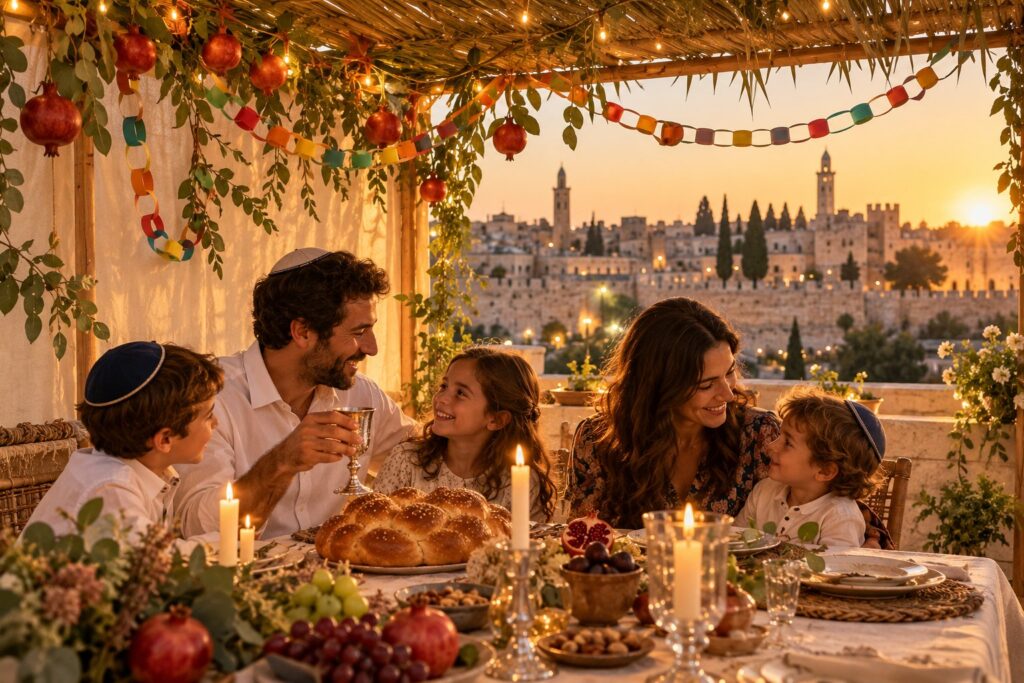
Just five days after the solemn fast of Yom Kippur, the Jewish calendar turns to celebration. Sukkot, the Feast of Tabernacles, is a week-long festival so full of happiness that the prayer book simply calls it Zman Simchateinu, “the season of our joy.” Families build temporary huts, share meals under a roof of branches, welcome guests, and wave the Four Species in the synagogue.
In this guide we explore the meaning of Sukkot, its history, how the sukkah and the Four Species are used, the special days that close the festival, and ideas for making the holiday meaningful for your family.
What Is Sukkot?
Sukkot (סוכות) means “booths” or “huts.” The holiday begins on the 15th day of the Hebrew month of Tishrei and lasts seven days. It is one of the three pilgrimage festivals (Shalosh Regalim), together with Passover and Shavuot, when in Temple times Jews from across the Land of Israel went up to Jerusalem to celebrate.
Sukkot has two layers of meaning:
- A historical festival. The Torah commands: “You shall dwell in booths for seven days… so that your generations will know that I made the children of Israel dwell in booths when I brought them out of the land of Egypt” (Leviticus 23:42-43). The sukkah recalls the forty years in the desert, when the Jewish people lived in temporary shelters under God’s protection.
- A harvest festival. Sukkot is also called Chag HaAsif, the Festival of Ingathering (Exodus 23:16), celebrated at the end of the agricultural year when the last crops were gathered in from the fields.
When Is Sukkot?
- Sukkot 2026 (5787) begins at sunset on Friday, September 25, 2026.
- The first day (in Israel) or first two days (outside Israel) are full holy days, followed by Chol HaMoed, the intermediate days of the festival.
- Hoshana Rabbah, the seventh day, falls on Friday, October 2, 2026.
- Shemini Atzeret and Simchat Torah begin at sunset on October 2. In Israel they are celebrated together on Saturday, October 3; outside Israel they continue until nightfall on Sunday, October 4, 2026.
- Sukkot 2027 begins at sunset on Friday, October 15, 2027.
The Sukkah: Living Under the Stars
The best known mitzvah of the festival is to “dwell” in the sukkah for seven days. In practice this means eating meals there, spending time there, and for some people even sleeping there. A kosher sukkah follows a few simple rules:
- It needs at least three walls, which can be made of almost any sturdy material.
- The roof, called schach, must be made of plant material that grew from the ground and is no longer attached to it, such as branches, palm leaves, or bamboo mats.
- The schach should give more shade than sun during the day, while still letting you see the stars at night.
- It must be built under the open sky, not under a tree or a balcony.
Decorating the sukkah is a beloved tradition, especially for children. Families hang fruit, paper chains, lights, and pictures of Jerusalem and the Seven Species of the Land of Israel. Beautifying a mitzvah, called hiddur mitzvah, turns a simple hut into a festive home for the week.
The Four Species (Arba Minim)
The Torah also commands: “On the first day you shall take for yourselves the fruit of a beautiful tree, branches of palm trees, boughs of leafy trees, and willows of the brook, and you shall rejoice before the Lord your God for seven days” (Leviticus 23:40). Jewish tradition identifies these as the Four Species:
- Etrog: a citron, a fragrant yellow fruit
- Lulav: a closed frond of the date palm
- Hadassim: three branches of myrtle
- Aravot: two branches of willow
Each day of Sukkot except Shabbat, the lulav, myrtle, and willow are held together in one hand and the etrog in the other. After reciting a blessing, they are waved in six directions: forward, right, back, left, up, and down, a reminder that God is found everywhere. They are held again during the Hallel prayer and carried in the Hoshanot procession around the synagogue.
A famous midrash (Vayikra Rabbah 30:12) compares the Four Species to four kinds of people. The etrog has both taste and fragrance, like a person with both Torah learning and good deeds. The willow has neither. Yet the mitzvah is only complete when all four are bound together, a beautiful message about the unity of the Jewish people.
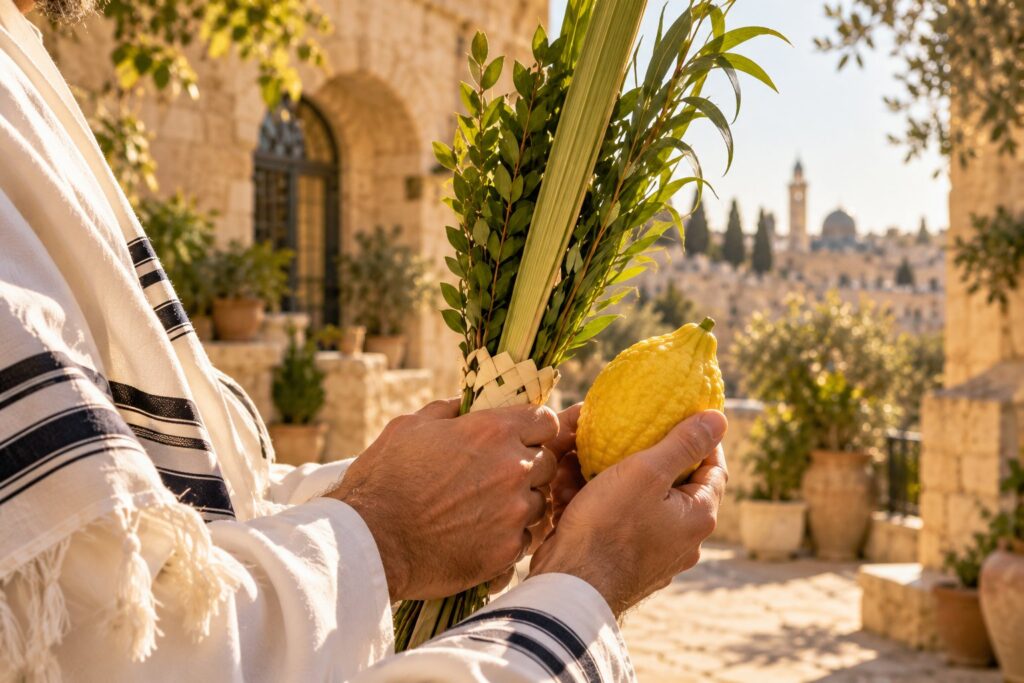
Choosing a beautiful etrog and a perfect lulav has always been taken seriously. In the days before Sukkot, the Four Species markets of Jerusalem are full of people examining every leaf and every fruit with a magnifying glass.
Ushpizin: The Seven Heavenly Guests
Hospitality is at the heart of Sukkot. According to Kabbalistic tradition, seven great leaders of the Jewish people visit the sukkah, one leading each night: Abraham, Isaac, Jacob, Moses, Aaron, Joseph, and David. Many families recite a short invitation to these Ushpizin (Aramaic for “guests”) at the start of the meal. The custom also reminds us to invite real guests, especially those who have nowhere else to celebrate.
Kiddush in the Sukkah
Festive meals in the sukkah open with Kiddush over a cup of wine. On Sukkot, a special blessing is added: leishev basukkah, thanking God for the commandment to dwell in the sukkah. On the first night, the Shehecheyanu blessing is recited as well, celebrating reaching this season once again.
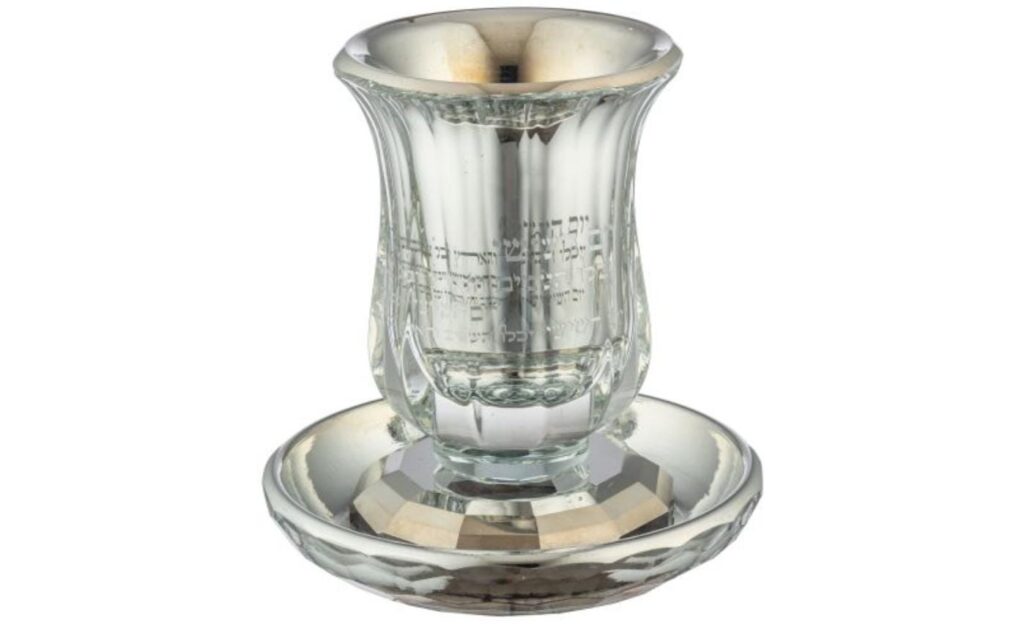
A beautiful Kiddush cup makes the blessing feel even more festive. Our crystal Kiddush cup and tray set, engraved with the Hebrew blessing, adds sparkle to the sukkah table and makes a wonderful gift for hosts.
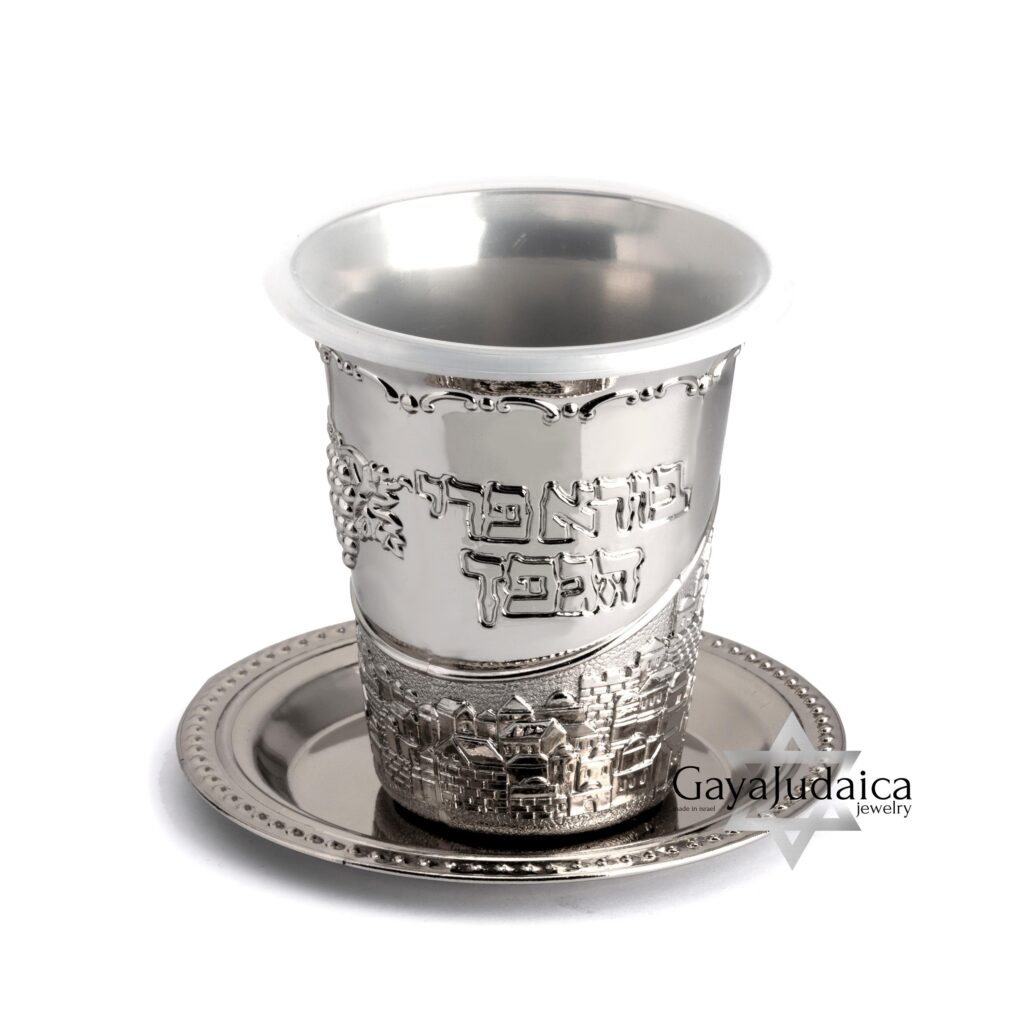
Since Sukkot was the great festival of pilgrimage to Jerusalem, a cup that carries the Holy City to your table is especially fitting. Our Jerusalem Kiddush cup is decorated with the skyline of the Old City.
Hoshana Rabbah, Shemini Atzeret, and Simchat Torah
Hoshana Rabbah
The seventh day of Sukkot is Hoshana Rabbah, “the great salvation.” In the synagogue, worshippers circle the bimah seven times holding the Four Species, and at the end of the service a bundle of willow branches is beaten on the ground. Tradition sees Hoshana Rabbah as the final sealing of the judgment written on Rosh Hashanah and sealed on Yom Kippur, so many people stay up the night before learning Torah.
Shemini Atzeret
Right after Sukkot comes Shemini Atzeret, “the eighth day of assembly.” It is a separate holiday, described by the sages as God asking His people to stay “just one more day.” On this day the prayer for rain, Tefillat Geshem, is recited for the first time, as the rainy season in the Land of Israel begins.
Simchat Torah
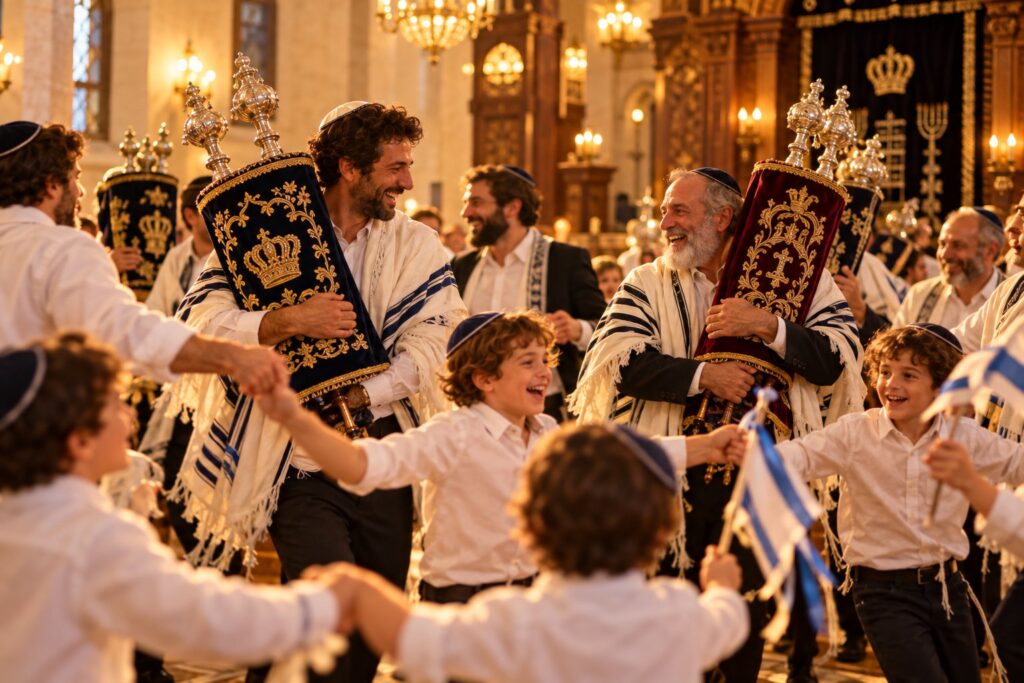
Simchat Torah, “rejoicing with the Torah,” celebrates completing the yearly cycle of Torah reading and beginning it again. The last portion of Deuteronomy is read, followed immediately by the first chapter of Genesis. The Torah scrolls are taken out of the ark and carried around the synagogue in seven joyful circles called hakafot, with singing and dancing that often spills into the street. In Israel it falls on the same day as Shemini Atzeret; outside Israel it is celebrated on the following day.
Traditional Sukkot Foods
There is no single signature Sukkot dish, but harvest themes shape the menu. Many families serve stuffed foods, such as stuffed peppers, stuffed cabbage, or stuffed vegetables, which symbolize abundance. Hearty soups and stews are practical for carrying out to the sukkah on cool autumn evenings. Some communities eat kreplach (filled dumplings) on Hoshana Rabbah, and many continue dipping round challah in honey through the festival, extending the sweetness of the new year.
The Meaning of Sukkot Today
Sukkot carries a surprising message. Right after the High Holidays, we leave our solid homes and sit in a fragile hut with a leafy roof. The sukkah teaches that true security does not come from walls and possessions, but from faith, family, and community. It is no accident that on Sukkot many communities read the Book of Ecclesiastes (Kohelet), with its reflections on what really lasts.
At the same time, Sukkot is pure joy: gratitude for the harvest, for the people around our table, and for another year of life. It is a holiday for opening our doors wide.
Meaningful Gifts for Sukkot
Visiting friends and family in their sukkah is a wonderful chance to bring a thoughtful gift. Judaica that will be used at the holiday table, such as a Kiddush cup, is always appreciated, as are jewelry pieces inspired by Jerusalem and by Jewish symbols. Browse our handmade Judaica from Jerusalem for gifts that carry the spirit of the festival all year round.
Want to learn about the other holidays of the Jewish year? Read our guides to Rosh Hashanah, Yom Kippur, and our complete guide to the Jewish holidays.
Frequently Asked Questions About Sukkot
What is the greeting for Sukkot?
The most common greeting is Chag Sameach (חג שמח), “Happy holiday.” During the intermediate days you may also hear Moadim L’Simcha, “times of joy.”
How long is Sukkot?
Sukkot itself lasts seven days. Together with Shemini Atzeret and Simchat Torah, the festival season lasts eight days in Israel and nine days outside Israel.
Do you have to sleep in the sukkah?
Many people do, especially in warm climates like Israel. Jewish law also recognizes that if staying in the sukkah causes real discomfort, for example in heavy rain or cold, one is exempt and may go indoors.
What happens if it rains on Sukkot?
If rain would spoil the meal, you may eat inside. The sages compared rain on Sukkot to a servant bringing his master a drink, only to have it thrown back in his face, a sign to wait for a better moment.
Can you work during Sukkot?
The first day(s) and Shemini Atzeret/Simchat Torah are full holy days, when most work is not done, though cooking for the holiday is permitted. During Chol HaMoed, many people take vacation and limit work to what is necessary.
Chag Sameach from Gaya Judaica in Jerusalem! May your sukkah be filled with guests, light, and joy.